
News & Events
National-Level Consultation Workshop on Community-led Housing
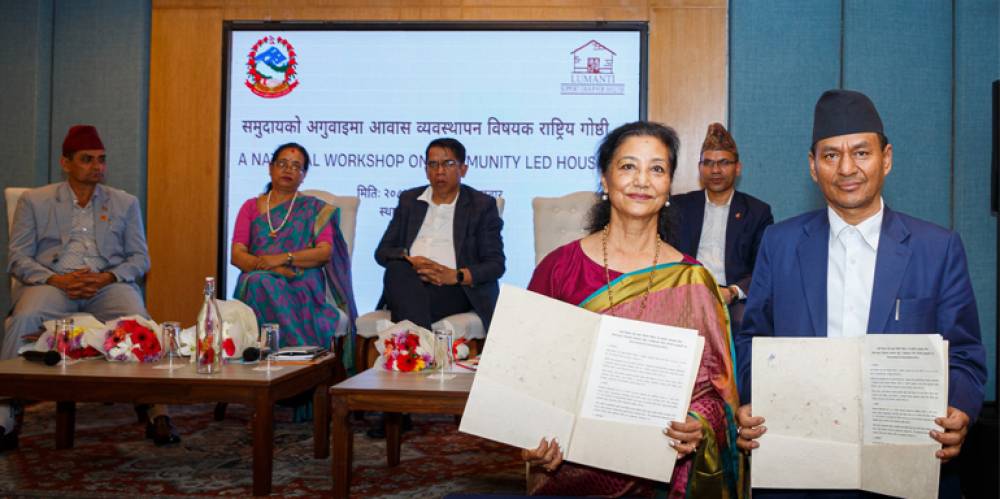
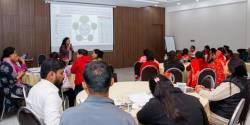
A National-Level Consultation Workshop on Community-led Housing was on 22nd June 2025, Sunday in Lalitpur. The event was jointly organized by Lumanti Support Group for Shelter, and Ministry of Urba Development (MoUD) with the motive foster meaningful discussions among communities, policymakers, practitioners, and development partners regarding community-led housing models. It was also intended to share successful practices, innovations, and insights gained from various community-led housing initiatives both within Nepal and internationally. Additionally, the workshop was aimed to address existing challenges, identify policy gaps, and explore opportunities for integrating community-led housing into the national housing framework and policies. Ultimately, the event has aspired to establish partnerships and collaborative networks that will support future efforts in advancing inclusive, affordable, and sustainable housing solutions.
The Chief Guest of the closing session, the Secretary of the Ministry of Urban Development, Gopal Prasad Sigdel, emphasized the significance of the right to housing, which is enshrined as a fundamental right in the constitution. He highlighted that ensuring access to housing for those without it is crucial, and the government is actively focusing on housing construction in alignment with urban development policies. He also mentioned that the government is undertaking a comprehensive survey to ensure that no individual is left without housing, reinforcing the government's dedication to addressing homelessness and improving living conditions for all citizens. Furthermore, Secretary Sigdel indicated that the process of amending the joint housing-related laws is currently underway. This amendment is expected to enhance the legal provisions surrounding housing and facilitate better access for those in need, he added.
The Mayor of Kalika Municipality, Vinod Regmi, emphasized the importance of not merely providing housing for marginalized communities but also ensuring that employment and income-generating programs are implemented alongside these housing initiatives. He pointed out that simply constructing homes is insufficient if the residents do not have the means to sustain themselves. Highlighting the challenges faced in implementing the programs at the local level, Mayor Regmi pointed out that the complexity arises from the numerous administrative bodies involved, which often leads to significant confusion and frustration for the beneficiaries seeking services. Regmi emphasized the need for streamlined processes to ensure that the intended support reaches those in need without unnecessary hurdles. The collaboration is expected to introduce new dimensions to the efforts of providing adequate housing solutions, thereby improving the living conditions of those who have been historically underserved, Regmi added.
Machakaji Maharjan, the Director General of the Department of Urban Development and Building Construction, stated that establishing housing rights can only be achieved through coordinated efforts among all relevant agencies. He stressed the necessity of collaboration among various stakeholders to create a comprehensive framework that supports housing development.
The chairperson of the Lumanti Support Group for Shelter, Gujeshwari Shrestha, talking about the memorandum of understanding between Lumanti and the Department of Urban Development and Building Construction, emphasized that the collaboration serves as a catalyst for enhancing housing provisions for marginalized communities. Shrestha underscored the importance of continuing to add momentum to these efforts.
On the occasion, a memorandum of understanding has been signed between the Ministry of Urban Development (MoUD) and Lumanti Support Group for Shelter. The purpose of the memorandum of understanding is to assist national, provincial, and local governments in providing housing access to low-income groups. It aims to showcase sustainable housing model projects and enhance access to essential infrastructure and services in unregulated communities. Additionally, the agreement seeks to increase the participation of community organizations in the housing policy-making process and to strengthen the capacity of partner organizations in promoting sustainable and inclusive housing. Furthermore, it promotes and encourages activities aimed at mitigating the impacts of climate change and other disasters. On behalf of the Ministry of Urban Development, Director General Mr Macharaja Maharjan has signed the memorandum of understanding, while the Executive Director Ms. Lajana Manandhar has represented Lumanti in the signing process.
Prior to the formal closing seesion of the event, the workshop was initiated with the welcome remarks of Dilip Bhandari, Joint Secretary of Ministry of Urban Development followed by the Paper Presentation on Scaling inclusive Urban Development through Community Led Housing: Lessons from Asia and Nepal."
The event featured panel discussions focused on two key topics: "Access to Land for Housing and Sustainable Communities" and "Access to Finance for Community-Led Housing for Affordable Homes for Low-Income Communities."
The workshop yielded significant outcomes, notably an increased acknowledgment of collective housing as a practical solution for urban development. It has facilitated the gathering of community experiences, which will inform future policy recommendations. Additionally, the event fostered stronger collaboration among government entities, civil society organizations, and local communities. Finally, a strategic roadmap was developed to enhance the implementation of collective housing initiatives across various municipalities in Nepal.
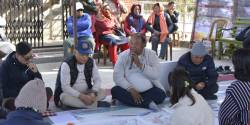
More than 70 participants attended the event, representing a diverse array of stakeholders. This included representatives from Ministry of Urban Development and Department of Urban Development and Building construction, other related government agencies, representatives from UN Habitat, Habitat for Humanities, community representatives from marginalized and informal settlements in Lumanti’s project implementation areas, such as Jeetpursimara, Kalika, Kalaiya, and Sundar Haricha.
The gathering also featured representatives from community networks and cooperatives, members from the Society of Nepalese Architects (SONA), RUPSON, academic institutions including Kathmandu University and the Institute of Engineering, along with researchers, urban planners, and media journalists. The event was supported by Asian Coalition for Housing Rights, UrbaMonde, SELAVIP Foundation, Fondation for Housing for the Disadvantaged People and MISEREOR.
Other Events
Share News:
-
Call Us
-
Email
-
Address